
A Different Kind of Victory: The Blue Bags
Yesterday, Japan’s World Cup journey came to an end. They were eliminated after a hard-fought match against Brazil. Yet one of the tournament’s most enduring lessons came not during the match, but after the final whistle.
As thousands of spectators began leaving the stadium, many Japanese supporters remained behind. Carrying the blue trash bags that have become a familiar sight at international tournaments, they quietly began collecting cups, wrappers, and other litter from the stands. No one instructed them to do it. There was no reward waiting for them. They simply believed that the place they had used should be left better than they found it.
Over the years, this practice has drawn admiration from around the world. Yet what strikes me most is not only the act itself, but the spirit behind it.
In Japan there is a long tradition known as sōji, the practice of caring for and cleaning shared spaces. From an early age, children learn to clean their classrooms and school buildings—not simply as a chore, but as a way of cultivating responsibility, humility, and respect for others. Behind this practice also lies another beautiful Japanese idea: mottainai, a word that expresses gratitude for what we have and a reluctance to waste or neglect it. Together, these values help explain why Japanese supporters quietly stayed behind to care for a stadium that did not belong to them.
As Christians, these values sound remarkably familiar. In the opening chapters of Genesis, God places humanity in the garden and entrusts it to our care. Creation is not ours to own; it is God’s gift to us. We are called to care faithfully for what has been entrusted to us, so that others may also enjoy and benefit from it.
The Japanese supporters did not clean the stadium because it belonged to them. They cleaned it because they understood that they shared responsibility for a place they had used. Their example invites each of us to ask an important question:
How do we treat the things that do not belong to us but have been entrusted to our care?
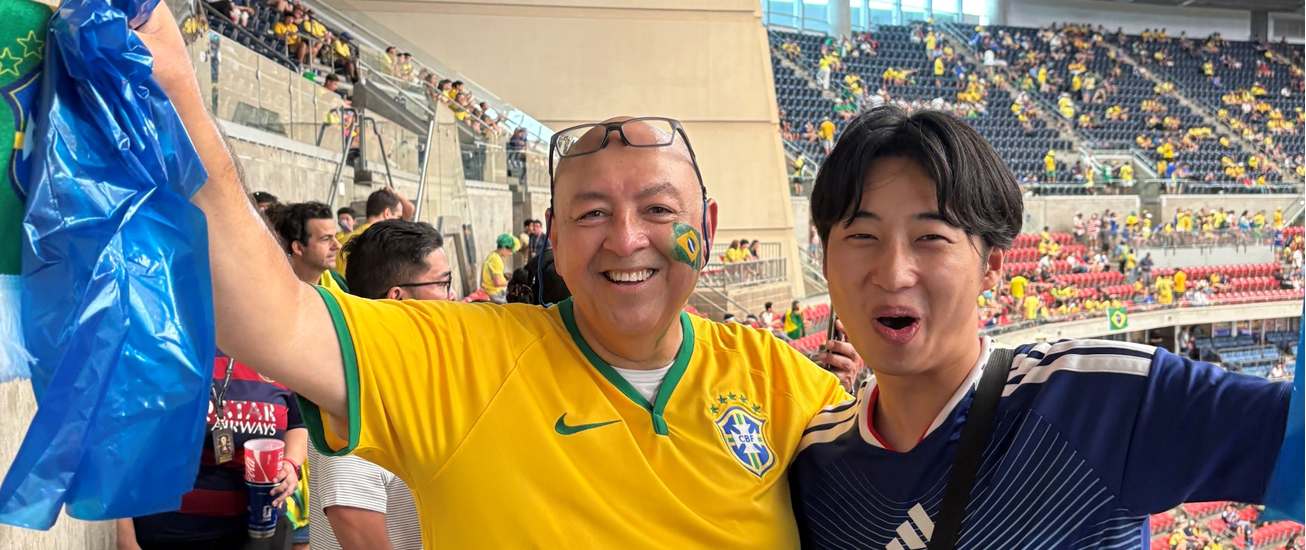
The question reaches far beyond a stadium. It applies to our environment, our churches, our neighborhoods, our workplaces, and our relationships. It challenges us to think about how we care for the resources we use, the communities we serve, and the people God places in our lives.
Too often we think that caring for creation and for what has been entrusted to us requires large projects or ambitious initiatives. Yet it usually begins with small and ordinary actions. It is found in the decision to recycle, to reduce waste, to care for a church building, to protect a natural space, to encourage a neighbor, or simply to leave a community stronger than we found it. These acts may seem small, but they reveal hearts shaped by gratitude and responsibility.
I am reminded that some of God’s most important work happens after the final whistle, when the crowds have gone home and no one is watching. Faithfulness is often expressed not through grand gestures but through quiet acts of care that honor both God and neighbor.
The World Cup will be remembered for its champions, spectacular goals, and unforgettable moments. Yet one of its most enduring lessons may come from a group of supporters who stayed behind to care for a place they did not own.
Japan did not advance to the next round.
But they left behind a lesson that no scoreboard could measure.
They reminded the world that character is revealed not only in the way we celebrate victory, but also in the way we respond to defeat.
That, too, is a different kind of victory.
Their example reminds us that caring for creation and for what has been entrusted to us begins with recognizing that everything we have ultimately belongs to God.
And perhaps that leaves us with a question worth carrying into each new day:
Are we leaving the places, the people, and the communities God has entrusted to our care a little better than we found them?
