News

"One Church: Separate But Not Equal"

“One Church: Separate But Not Equal”

After the Civil War, white Episcopalians found themselves in a spiritual and ethical quandary as to what to do about freed slaves. Several issues faced them: 1) Reclaiming the masses of newly emancipated slaves who fled the church once they were declared “free;” 2) Training of black preachers whose fitness to be ministers they questioned; 3) How and if and to what extent to allow these “freedmen” to have voice in the governance of the Church–their own and the larger Church; and 4) Whether or not to create separate racial jurisdictions.

In Common Austin 2020: Inspiration

In Common Austin 2020: Inspiration, Connection, and Action!

For the third consecutive year, clergy lay leaders, and community partners gathered for the Episcopal Health Foundation’s In Common event. The gathering serves as a place for Episcopal congregations and their community partners to dream big, be inspired, and create a vision with like-minded individuals and congregations interested in building healthier communities.

Abundant Harvest Needs Volunteers

Abundant Harvest Needs Volunteers

With the global pandemic, the need for food has increased significantly. The Abundant Harvest Kitchen, part of St. Isidore, Spring, is on the front lines meeting the needs of the most vulnerable in our community. In this work, we are looking for partners to help staff a mobile non-contact food pantry.

The Religious Meaning of the Emancipation Proclamation

The Religious Meaning of the Emancipation Proclamation

W.E.B. Dubois observed in his history of the Reconstruction era that news of the signing of the Emancipation Proclamation resulted in exuberant expressions of religious feelings among African Americans in the South. Beginning on January 1, 1863, with the signing of the Emancipation Proclamation, Union Army camps became both bases of military operations and havens for thousands of jubilant runaways.

The Episcopal Diocese of Texas Announces Commitment of  $13 Million to Fund Racial Justice Projects to  Repair and Commence Racial Healing

The Episcopal Diocese of Texas Announces Commitment of $13 Million to Fund Racial Justice Projects to Repair and Commence Racial Healing

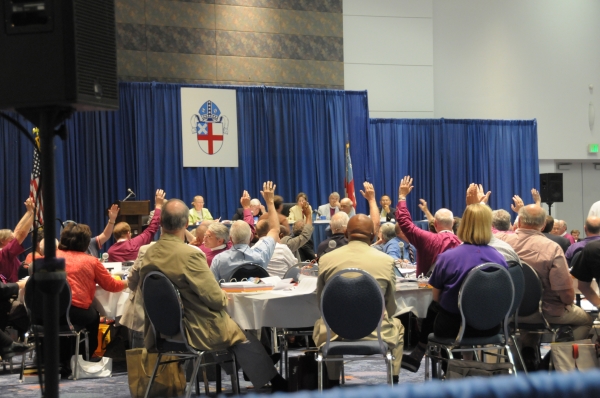
In an unprecedented move, the Rt. Rev. C. Andrew Doyle, the ninth bishop of the Episcopal Diocese of Texas, presented a Missionary Vision for a Racial Justice initiative that aims to repair and commence racial healing for individuals and communities who were directly injured by slavery in the diocese. The announcement was made at the 171st Diocesan Council held in Waco, Texas, February 7-8, 2020.

Translate »