
Reflections from a Vocation and Leadership Pilgrimage at Camp Capers (Waring, Texas)
By the Rev. Alex Montes-Vela
Earlier this month (March 9–11, 2026), the Episcopal Diocese of Texas hosted its first Vocation and Leadership Pilgrimage at Camp Capers. Designed for college students, graduate students, and emerging young professionals, the pilgrimage was intended as a time of discernment and discipleship — an opportunity to step away from the normal pace of life, reflect on vocation and leadership, and listen together for God’s voice.
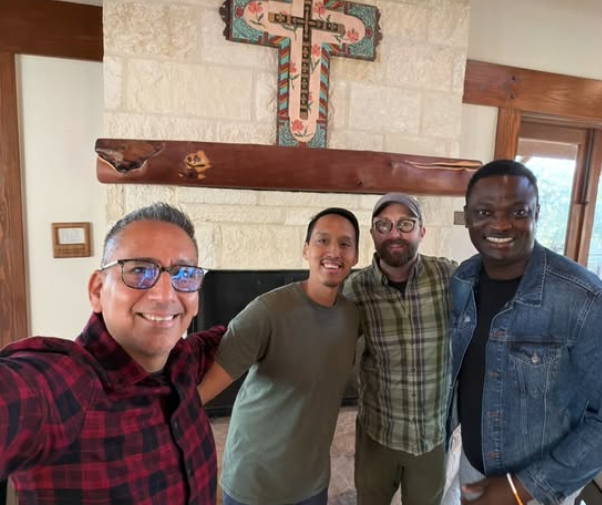
Yet the pilgrimage began in an unexpected way.
On Monday evening, as dinner time passed and no students had arrived, Canon Dr. Josh Ritter and I sat in the Camp Capers dining hall wondering what the next few days might look like. We had planned and prepared for a small group of students, but as the evening stretched on it seemed possible that no one might come.
Then, just after 6:00 p.m., a student walked into the dining hall.

Adewumi Adeloye, a doctoral student in Electrical and Computer Engineering at Prairie View A&M University, had arrived earlier than we realized and had been texting what he thought was Josh’s number to say he had reached the camp safely. Only later did we discover that he had been texting the wrong number.
When Adewumi walked into the dining hall, we were elated and grateful. Even then we did not know how the pilgrimage would unfold. We still hoped that more students might arrive later that evening or early the next morning.
That did not happen.
Yet something remarkable began to take shape.
Over the next two days, the pilgrimage unfolded in a deeply personal and meaningful way. The rhythm of prayer, conversation, shared meals, and time outdoors created space for reflection about vocation and the journey of faith.
Our conversations were shaped by Scripture and by the writings of theologian Howard Thurman, particularly his invitation to listen for what he called “the sound of the genuine” within our lives.
We began that Monday evening by reflecting on Moses encountering the burning bush — a moment when an unexpected interruption became a turning point in his life. Like Moses, we reflected on the ways God sometimes interrupts our routines and invites us to turn aside and pay attention.
From there, the conversation moved toward a powerful question: “Whose harvest are you?” Each of us carries within our lives the influence of those who planted seeds of faith, encouragement, and wisdom. Naming those people helped us recognize how God has been quietly shaping our journeys through the lives of others.
On Tuesday morning, I woke early to the sound of birds singing and walked to the outdoor chapel at Camp Capers. Sitting there alone in the quiet, I remembered that I had been at that same place a few years earlier during a discernment retreat connected to the Bishop Coadjutor election in the Diocese of West Texas. That earlier experience had been a moment of rediscovering my voice and learning again to be myself in God’s presence. Sitting there during this pilgrimage, I was reminded how often the different seasons of our lives prepare us for what comes next — even when we do not fully understand it at the time.
Later that afternoon, we gathered at Camp Capers’ 40-foot climbing wall. As each person climbed, the others held the ropes and encouraged from below. Watching one another climb became a powerful metaphor for the journey of vocation. Sometimes we climb. Sometimes we hold the rope for someone else. And often we learn courage by watching the steps taken by those ahead of us.


During Eucharist on Tuesday evening, we reflected on the story of the disciples on the road to Emmaus (Luke 24:13–35), remembering how often Christ walks alongside us long before we recognize his presence.
After Eucharist, as we reflected on the Beatitudes and prepared for a campfire, a weather alert warned of an approaching storm that could include baseball-sized hail. We moved our cars under a covered area and shifted our plans indoors. Instead of gathering around the campfire, we made s’mores in the kitchen oven while continuing our conversation about Jesus’ invitation to become people shaped by mercy, humility, and love. Outside, thunder rolled and lightning flashed, but inside the conversation continued with laughter, reflection, and gratitude.
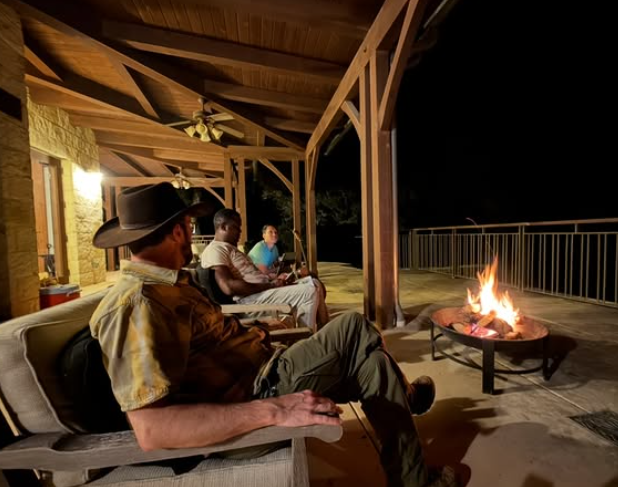
The pilgrimage also became a meaningful time for me to share the experience with my family. My son Thanh offered music for our worship, and it was a joy to share meals with my daughter-in-law Luz and my granddaughter Sofia during our time at Camp Capers.
The pilgrimage concluded earlier than expected when Adewumi needed to return to Prairie View for a scheduled meeting with his academic mentors as he prepares for his dissertation defense. Yet even that unexpected ending became part of the journey.
After returning home, Adewumi shared how meaningful the experience had been for him.
“The few days spent together felt like two weeks,” he wrote afterward. “My head space is obviously better situated, and I am greatly encouraged already. My research approach is more effective and my momentum has returned.”
What began as an uncertain experiment became a powerful reminder of something deeply true about pilgrimage and about ministry itself.
The journey rarely unfolds exactly as we expect.
Yet again and again we discovered that even the unexpected moments became part of the gift of the experience.
As we reflected together at the end of our time at Camp Capers, one simple insight seemed to capture the spirit of the pilgrimage:
Nothing gets wasted.
In the journey of faith, every step — even the unexpected ones — can become part of how God shapes us for what comes next.
We are grateful for the ways this first pilgrimage has begun to shape what future vocation pilgrimages in the Episcopal Diocese of Texas might become.


