By Albina Velasco
How faith, female leadership, and diocesan partnership transformed girls’ education in Malawi
Read in Texas Episcopalian Magazine Here (pages 60, 61, and 62): https://online.fliphtml5.com/TheEpiscopalDioceseOfTexas/TE_Magazine_2025/
In 2025, girls’ dropout rates in Anglican schools in southern Malawi fell from nearly 40% to almost zero. This transformation began with two women speaking truth.
Malawi is a landlocked country in southeastern Africa and a male-dominated society where poverty made puberty a barrier to learning. Families could not afford sanitary supplies, schools lacked running water, and girls had no safe spaces to manage their hygiene. Students missed class, fell behind, and eventually stopped attending altogether. Without school, many were pushed into domestic labor or married early. Education did not fail them. Circumstances did.
TWO WOMEN SPEAK UP
The turning point came during a partnership pilgrimage — an official exchange visit organized between members of the Anglican Diocese of Southern Malawi and lay leaders of the Episcopal Diocese of Texas. Constance Mhone and Agnes Salaka, both members of the Malawi’s Partnerships Committee, traveled to Texas as part of that delegation. During an all-women meeting, they named what was happening back home: Girls were dropping out of school between their 5th and 8th grades, worn down by a combination of poverty, cultural pressure, and the absence of basic facilities. They proposed a solution. And for the first time, the right people were listening.
“It was women’s leadership that changed the situation. Malawians are proud of that.”— Constance Mhone, Anglican Diocese of Southern Malawi Partnerships Committee


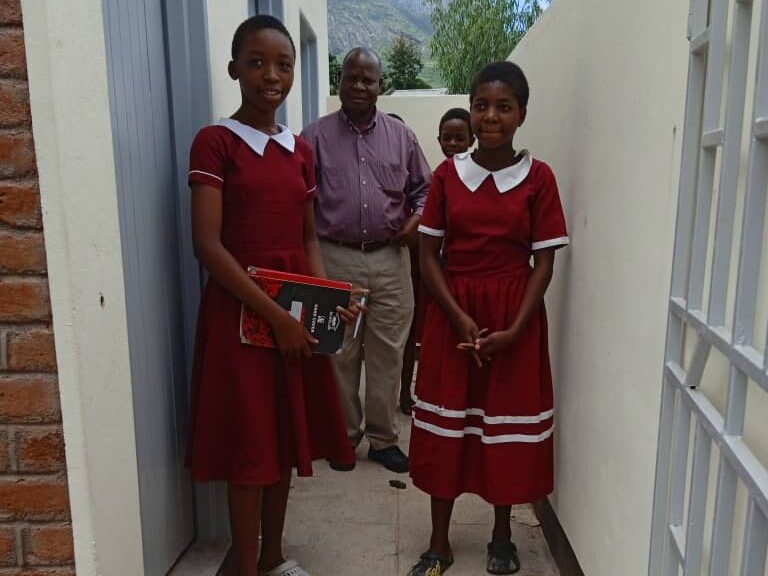
Constance Mhone (left) and Agnes Salaka (right)
THE PARTNERSHIP TAKES SHAPE
What followed was two years of negotiation and planning, guided throughout by Malawian women and the Diocese of Texas partners. The result was a two-pillar program:
1. Wash and change rooms that offered private, hygienic spaces built in diocesan schools
2. Scholarships for orphaned and vulnerable girls (known in development contexts as OVC — Orphaned and Vulnerable Children) offered direct financial support to keep girls enrolled in school.
“When girls have a safe, private space and the financial support to stay, everything changes. We knew what our girls needed. We just needed partners willing to listen.”— Agnes Salaka, Anglican Diocese of Southern Malawi Partnerships Committee.
UNDERSTANDING THE PARTNERSHIP
The program brought together different organizations and ministries, each playing a distinct role:
• Global Partnerships in Mission (GPIM) of the Episcopal Diocese of Texas helped fund two wash and change rooms.
• Warm Heart International (WHI), a nonprofit affiliated with St. David’s Episcopal Church in Austin and recognized by the Episcopal Diocese of Texas, led and funded the construction of the wash and change rooms and supported scholarships for orphaned and vulnerable girls in primary and secondary schools, through its Girls Education in Malawi (GEM) committee.
• The Anglican Diocese of Southern Malawi provided leadership and implementation on the ground. By 2025, the initiative had reached full implementation. Together, these organizations built eight wash and change rooms: six in primary schools across the communities of Bakasala, Nasulu, Nambiro, Chiweni, Nantcheu, and Mlambe, and two at Trinity Anglican Secondary School.
“With the help of our friends from Texas through Warm Heart International and Global Partnerships in Mission (GPIM), a total of eight washrooms have been built.” — Tawanda S. Madovi, Chairman of the Anglican Diocese of Southern Malawi Partnerships Committee
MORE THAN BUILDINGS
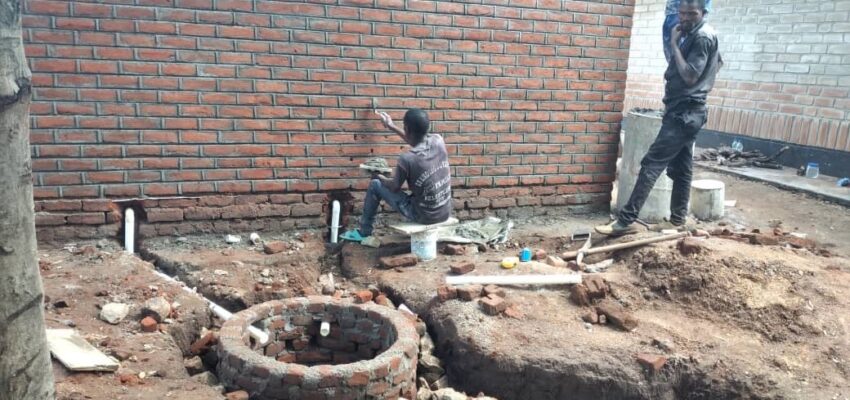
As construction progressed, 15 scholarships were awarded to vulnerable girls across 7Anglican schools. Those schools are now known in their communities as “scholarship schools” — a designation that carries real meaning locally, signaling that a school has earned the trust and investment of outside partners, and that girls there are valued and supported. The Anglican Diocese of Southern Malawi covers seven districts and is now among the pioneers addressing what remains a nationwide challenge. The Phalombe District Education Office formally recognized the program’s impact, describing the scholarships as “a sigh of relief” for families and noting the washroom at Nantcheu Primary School as essential to keeping girls enrolled. The physical infrastructure alone would not have been enough. Central to the program’s success were the mother groups: community women who volunteered to mentor girls, educate families, and challenge the cultural norms that once made dropout feel inevitable.
“This was never just about buildings. Without facilities, financial support, and people walking with the girls and their families, the problem would remain.”
— Member of the Mother Group
The program has also shifted attitudes among men and boys. Where girls were once mocked for stained clothing, boys now recognize that they are becoming young women. There is a growing sense of understanding and respect. Boys are now happy to have their sisters and friends in school with them as they progress.
Canon Charles Masina described the initiative as a pastoral act, a demonstration that culture should never block God’s love but can instead become the place where dignity is restored. The Rt. Rev. Alinafe Kalemba affirmed:
“We are restoring dignity that was always intended by God.”
That dignity was always there. It took women — Constance Mhone, Agnes Salaka, and the mothers who followed them — to demand it be seen.
SUPPORT THIS MINISTRY:
www.warmheartinternational.org